
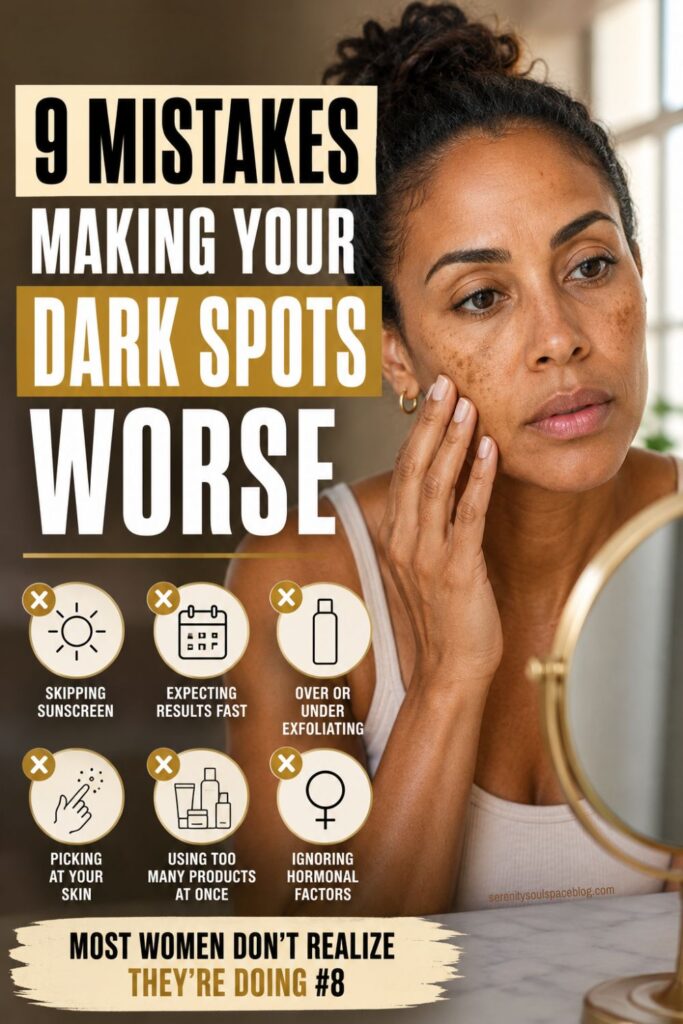
9 Hyperpigmentation Mistakes That Are Wasting Your Time and Money
This post contains affiliate links, meaning that as an Amazon associate, I may earn a small commission at no extra cost to you if you make a purchase through these links. For more details, please read our disclosure policy.
You’ve been at this for months. Maybe even longer. You bought the serums, you read the ingredient lists, you tried the patches and the creams and the “holy grail” treatments everyone on the internet swears by. And yet, your dark spots and hyperpigmentation are still sitting there, stubborn as ever, like they paid rent and plan to stay.
Here’s what I want you to know before you buy one more product: the issue is probably not your skin. It’s the approach.
Dark spots and hyperpigmentation are incredibly common, especially for women over 25. Sun damage accumulates, hormones shift, old breakouts leave souvenirs behind, and skin that once bounced back quickly just doesn’t work the same way it used to. That’s completely normal. But what keeps so many women stuck in the frustration cycle is not a lack of trying. It’s a handful of specific mistakes that quietly sabotage the results they’re working toward.
This post is going to walk you through nine of those mistakes for the purpose of giving you the real, honest information you need to actually move forward. Consider this your reset moment.
And yes, I’ll be recommending some products along the way. Everything I mention is linked on Amazon, and I only suggest things that have a solid track record and strong reviews. You deserve to invest in things that actually work.
Mistake #1: Skipping Sunscreen Even on Cloudy Days and Indoors
If there is one thing that will make every other step in your dark spot routine completely pointless, it’s going without sunscreen. I know you’ve heard this before, but I need you to really hear it this time.
Here’s what’s happening inside your skin: hyperpigmentation is caused by excess melanin production. When your skin is exposed to UV rays, even the gentle, diffuse kind that sneaks through clouds or bounces off reflective surfaces, it triggers your melanocytes to produce more melanin.
If you already have dark spots and hyperpigmentation, that UV exposure signals your skin to keep making pigment in those areas. You can be applying the best vitamin C serum on the market every single morning, but if you’re walking out the door without SPF, you are essentially canceling your own progress.
And yes, this applies indoors, too. UVA rays, the ones responsible for pigmentation and premature aging, pass right through glass. So if you work near a window, sit in a sunny car, or just spend time near natural light, your skin is still being exposed.
The good news is that daily sunscreen doesn’t have to feel heavy or annoying. There are lightweight, skin-toned-friendly SPF formulas that absorb beautifully and don’t leave that white cast behind. If you want to see real improvement in your dark spots and hyperpigmentation, this is the non-negotiable step. Everything else builds on it.
What to use: Look for a broad-spectrum SPF 30 or higher with lightweight or tinted formulas. Popular options on Amazon include mineral sunscreens with zinc oxide that offer both UVA and UVB protection without irritating sensitive skin.
Mistake #2: Expecting Results Too Quickly
Dark spots and hyperpigmentation are not an overnight problem, and they’re not going to be an overnight fix. One of the most common reasons women give up on a routine that’s actually working is that they stop too soon.
Here’s a realistic timeline for you: your skin naturally cycles through its renewal process approximately every 28 days, and that cycle slows down as you get older. Most treatments that target melanin production or promote cell turnover take at least 8 to 12 weeks to show visible results. Some, like niacinamide or azelaic acid, may take even longer to deliver their full effect.
That’s not a flaw in the product. That’s just how skin biology works.
If you’ve been using something for two or three weeks and you’re not seeing a difference, please don’t throw it out. Take a picture of your skin now, mark your calendar for 12 weeks, and compare then. You might be surprised at what consistent, patient use actually produces.
On the other hand, if you’ve been consistent for a full three months and you genuinely see no change at all, that’s a signal that either the product isn’t right for your skin or your routine has a gap somewhere. Keep reading.
Mistake #3: Not Exfoliating or Exfoliating Way Too Much
Exfoliation is one of the most powerful tools in the fight against dark spots and hyperpigmentation, but it’s also one of the most misused.
If you’re not exfoliating at all, pigmented cells are sitting on the surface of your skin without being cleared away. Your brightening products can only do so much when they’re trying to penetrate through layers of dead skin. Regular exfoliation helps remove those surface cells and allows your treatments to reach deeper, newer skin where they can actually make a difference.
But here’s the other side of that coin. Over-exfoliating is just as much of a problem, and it’s something a lot of enthusiastic skincare people run into. When you exfoliate too frequently or use formulas that are too harsh, you damage your skin barrier. And a damaged barrier triggers inflammation. And inflammation? That’s one of the main drivers of post-inflammatory hyperpigmentation (PIH), which is the kind of dark spot left behind by breakouts, friction, or skin trauma.
In other words, too much exfoliation can actually create new dark spots and hyperpigmentation while you’re trying to treat the ones you already have.
The sweet spot for most skin types is two to three times per week using a gentle chemical exfoliant rather than a physical scrub. AHAs like glycolic acid or lactic acid work well for surface-level pigmentation, while BHAs like salicylic acid are great if you also deal with clogged pores.
What to use: Gentle AHA/BHA chemical exfoliants are widely available on Amazon. Look for leave-on formulas with glycolic acid, lactic acid, or mandelic acid at a concentration of 5 to 10 percent for beginners.
Mistake #4: Using Vitamin C Wrong
Vitamin C is genuinely one of the most effective ingredients available for treating dark spots and hyperpigmentation. It inhibits the enzyme that triggers melanin production, brightens existing discoloration, provides antioxidant protection against future damage, and is absolutely worth having in your routine.
The problem is that most people are using it incorrectly, and as a result, they’re not getting the full benefit.
First, vitamin C is extremely unstable. It oxidizes when exposed to air, light, and heat, which is why you may have noticed your serum turning yellow or orange over time. That color change means the ingredient has degraded and is no longer as effective. You want to store it in a dark, cool spot, not on your bathroom counter in direct light, and replace it regularly.
Second, vitamin C is most effective when applied to clean, dry skin in the morning, before your moisturizer and definitely before your SPF. Using it at night is not wrong, but you lose the synergy it has with sunscreen during daytime hours, where together they create stronger protection against UV-triggered pigmentation.
Third, not all vitamin C is created equal. L-ascorbic acid is the most potent and well-researched form, but it’s also the most unstable and can be irritating at high concentrations. If your skin is sensitive, look for more stable derivatives like ascorbyl glucoside or sodium ascorbyl phosphate.
What to use: Vitamin C serums with 10 to 20 percent L-ascorbic acid or stabilized derivatives like TruSkin, Mad Hippie, or similar options on Amazon with thousands of positive reviews.

Mistake #5: Picking at Your Skin
I know. I know. It’s hard not to. But if you want to tackle your dark spots and hyperpigmentation, this habit has to go.
Every time you pick at a pimple, scratch a bump, or pop a blemish, you’re creating trauma in that layer of skin. Your body responds to that trauma with inflammation, and during the healing process, your melanocytes go into overdrive, producing excess pigment to protect the damaged area. The result is post-inflammatory hyperpigmentation (PIH), those flat brown or grayish marks that stick around long after the original blemish is gone.
This is especially true for deeper skin tones, which tend to produce more melanin in response to inflammation. But fair-skinned women deal with it too. The damage may look different, sometimes reddish or pinkish rather than brown, but it’s still PIH, and it still takes months to fade.
The best thing you can do is treat blemishes without touching them and let your skin do its job. If you have an active breakout, use a spot treatment and cover it with a hydrocolloid patch instead of picking. Those little patches draw out fluid, protect the area from bacteria and friction, and significantly reduce the risk of the PIH that causes dark spots and hyperpigmentation in the first place.
Mistake #6: Layering Products in the Wrong Order
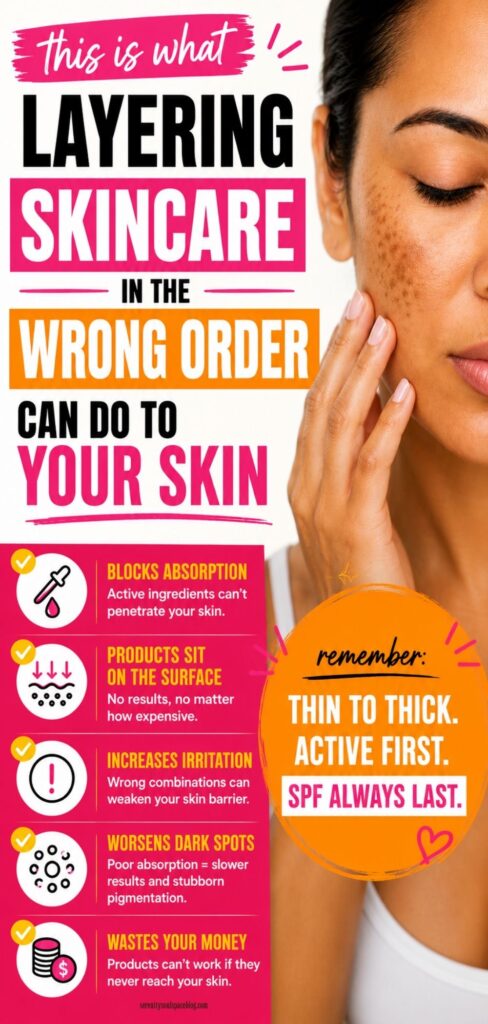
Your skincare products can only work if they actually absorb into your skin. And absorption depends heavily on what order you apply them.
The general rule is to layer from thinnest to thickest consistency, with the most active, treatment-focused products applied closest to clean skin. That means your dark spot correcting serums and treatments go on before your moisturizer, not after. If you’re applying your vitamin C serum on top of a thick moisturizer, you’re essentially blocking it from reaching the skin cells it’s meant to treat.
Here’s a simple morning routine order that works well for dark spots and hyperpigmentation:
- Cleanser
- Toner or essence (optional)
- Vitamin C serum or other brightening treatment
- Moisturizer
- SPF
At night, the order shifts slightly. After cleansing and toning, apply your chemical exfoliant (on exfoliation nights), then your treatment serum (niacinamide, retinol, or dark spot corrector), then moisturizer.
Also worth noting: some ingredients cancel each other out when layered together. Vitamin C and niacinamide used to be thought of as a combination to avoid, though more recent research suggests they can actually work fine together. However, retinol and acids like glycolic acid can be irritating when used in the same routine. Alternating those on different nights is usually a safer approach, especially if your skin leans sensitive.
Mistake #7: Only Treating Dark Spots and Hyperpigmentation on Your Face
Dark spots and hyperpigmentation don’t only show up on your face. Body hyperpigmentation is incredibly common, and it’s often completely overlooked.
Think about your knees, elbows, underarms, inner thighs, and bikini area. These spots often develop discoloration over time from friction, pressure, shaving, waxing, or just the natural accumulation of dead skin. Wearing tight clothing that rubs against your skin day after day can absolutely contribute to darkening in those areas. And if you’re treating your face but ignoring the rest of your body, you’re only solving part of the problem.
For body hyperpigmentation, many of the same principles apply. Regular exfoliation, moisturizing, and targeted treatments with brightening ingredients like niacinamide, kojic acid, or alpha arbutin can make a real difference over time. There are also body lotions and creams formulated specifically for dark spots on the body that are worth exploring.
Plus, don’t forget sunscreen on your body too. Dark spots on your chest, shoulders, and hands can deepen quickly from sun exposure, especially in the summer months.
What to use: Body dark spot correctors and brightening lotions with kojic acid, niacinamide, or alpha arbutin are available on Amazon and can be used on knees, elbows, underarms, and inner thighs.
Mistake #8: Ignoring Hormonal Hyperpigmentation (Melasma)
Not all dark spots and hyperpigmentation are created the same way, and this is a distinction that genuinely matters for how you treat them.
Melasma is a specific type of hyperpigmentation that’s driven by hormonal changes, and it’s incredibly common in women. It often appears as larger, symmetrical patches across the forehead, upper lip, cheeks, and chin, and it can be triggered or worsened by pregnancy, birth control pills, hormone replacement therapy, or even heat.
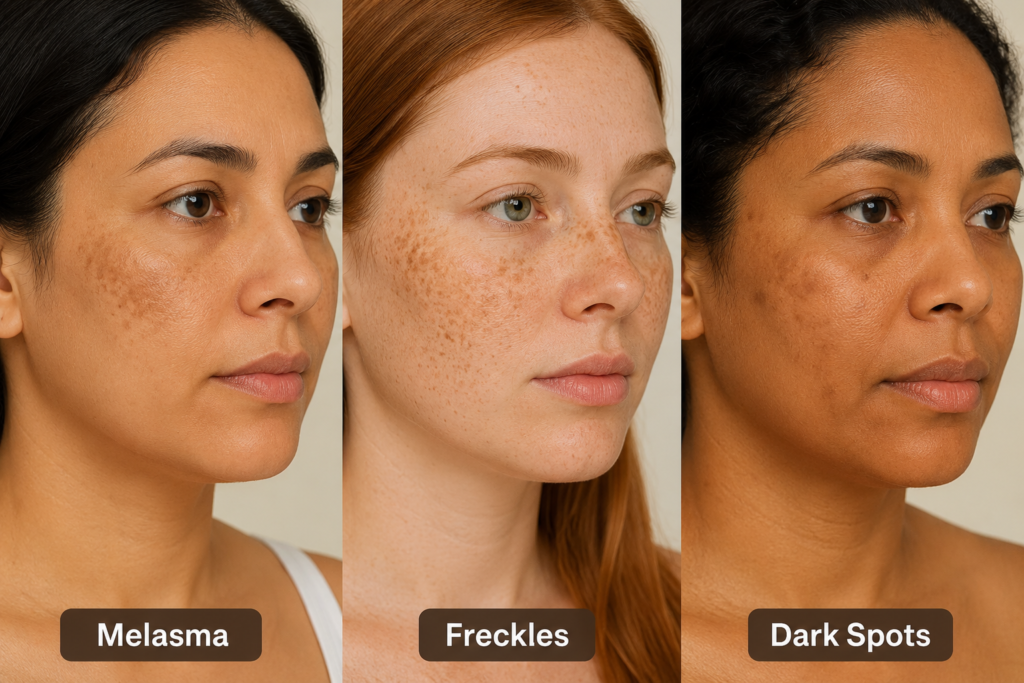
Here’s where women often go wrong: they treat melasma exactly the same way they’d treat sun damage or post-inflammatory hyperpigmentation, and then wonder why they’re not seeing results. Melasma sits deeper in the skin than other types of dark spots, and it’s much more stubborn because the trigger, hormonal activity, is often still present.
That doesn’t mean it can’t be improved. But it does mean you need a more targeted approach. Ingredients like tranexamic acid, kojic acid, azelaic acid, and alpha arbutin tend to work better for melasma than standard brightening ingredients alone. Strict sun protection is absolutely essential because even a small amount of UV exposure can undo weeks of progress on melasma.
If you suspect you have melasma rather than general dark spots and hyperpigmentation, it’s also worth having a conversation with a dermatologist. There are prescription-level treatments that work significantly better for this specific type, and knowing what you’re dealing with before you spend money on products will save you a lot of frustration.
What to use: Look for dark spot serums featuring tranexamic acid or azelaic acid, which are specifically helpful for hormonal hyperpigmentation. Several well-reviewed options are available on Amazon.


Mistake #9: Constantly Switching Products Before Giving Them a Real Chance
This might be the hardest mistake to avoid, especially when you’re dealing with something as frustrating as stubborn dark spots and hyperpigmentation. The temptation to try the next thing is real, especially when social media is constantly showing you the newest serum, the hottest trending ingredient, or the “I cleared my hyperpigmentation in 30 days” success story.
But constantly switching products is one of the most counterproductive things you can do. When you introduce a new product before an old one has had time to work, you don’t actually know what’s helping, what’s not, or whether you’re experiencing a purging phase versus a true reaction. And if you switch too often, you can also irritate or sensitize your skin, which, as we talked about earlier, can lead to even more dark spots and hyperpigmentation.
A better approach is to build a simple, focused routine and commit to it for at least 90 days before evaluating. When you add something new, introduce one product at a time so you can actually tell what’s making a difference.
Think of it this way: your skin is not a social media experiment. It’s a long-term project. Consistency and patience are the two things that separate women who finally see results from women who stay frustrated.
Building the Right Routine for Dark Spots and Hyperpigmentation
Now that we’ve walked through the mistakes, let’s talk about what actually works. Here’s a simple framework you can use to build a solid, effective routine for dark spots and hyperpigmentation without overwhelming your skin or your budget.
Morning Routine
- Gentle cleanser
- Vitamin C serum (10 to 20%)
- Lightweight moisturizer
- Broad-spectrum SPF 30 or higher
Evening Routine
- Gentle cleanser (double cleanse if you wear sunscreen or makeup)
- Chemical exfoliant 2 to 3 times per week (glycolic or lactic acid)
- Dark spot corrector or brightening serum (niacinamide, tranexamic acid, or alpha arbutin)
- Rich moisturizer
Honestly, less is more here. A few well-chosen products used consistently will take you further than a bathroom counter full of things you rotate in and out.
Favorite Products for Dark Spots and Hyperpigmentation
You don’t need a celebrity budget or a 12-step routine to see results. These are solid, accessible options on Amazon that contain the ingredients dermatologists and skincare researchers actually stand behind. Check the reviews, read the ingredient lists, and pick what makes sense for where your skin is right now.
Best Vitamin C Serums:


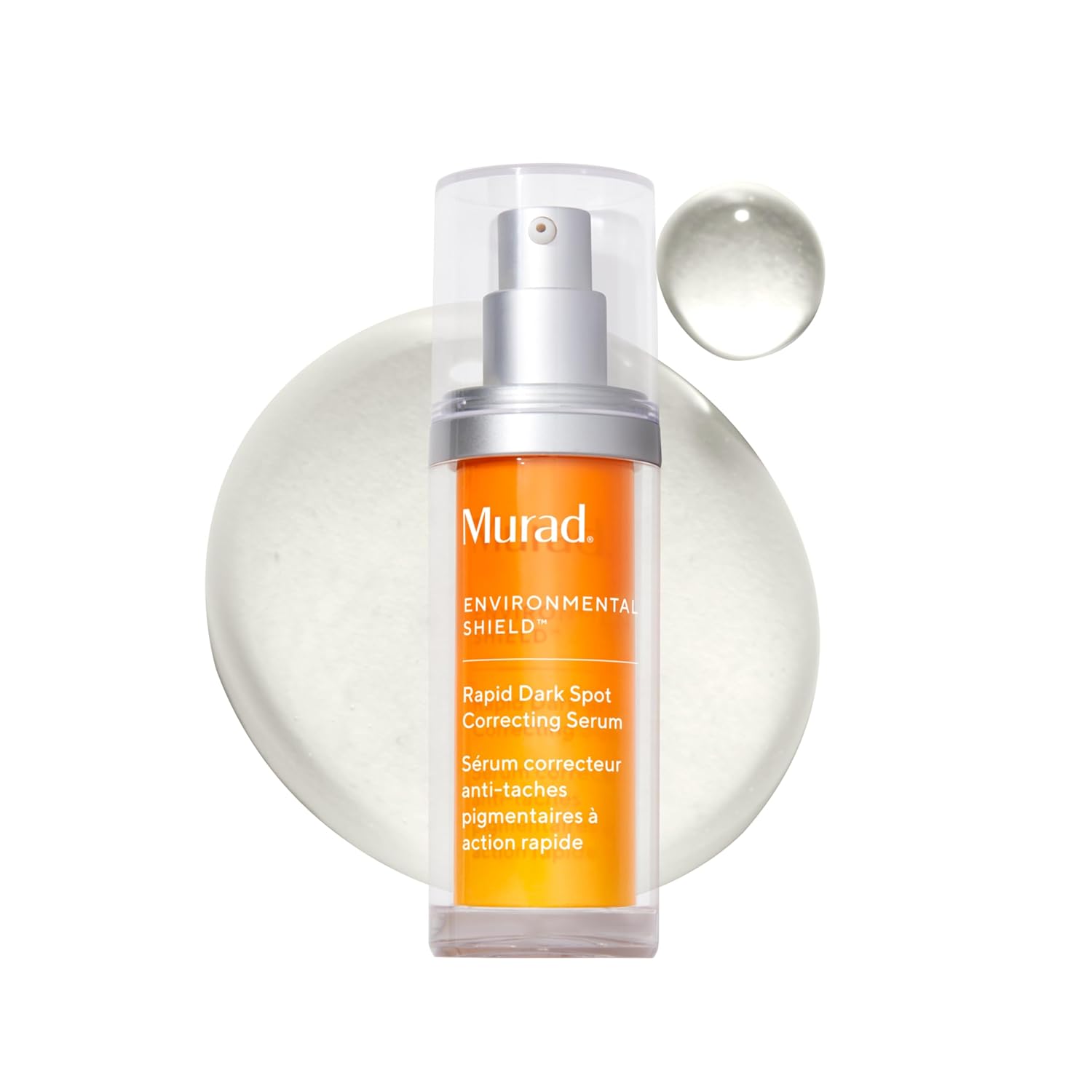
Best Dark Spot Correctors:

Best Chemical Exfoliants:


Best Sunscreens for Hyperpigmentation-Prone Skin:


A Few Parting Words: You Can Finally See Results
Dealing with dark spots and hyperpigmentation is genuinely frustrating, especially when you feel like you’re doing everything right and still not seeing results. But most of the time, the answers are in the details. It’s the skipped SPF, the rushed timeline, the too-frequent product switching, the overlooked hormonal component.
Now that you know what to avoid and what to focus on, you have a real shot at making progress. Pick one or two of these mistakes that you recognize in your own routine and start there. You don’t have to overhaul everything at once.
Your skin didn’t develop dark spots and hyperpigmentation overnight, and it won’t be clear overnight either. But with the right routine, the right products, and a commitment to consistency, you can absolutely get there.







Leave a Reply
You must be logged in to post a comment.