
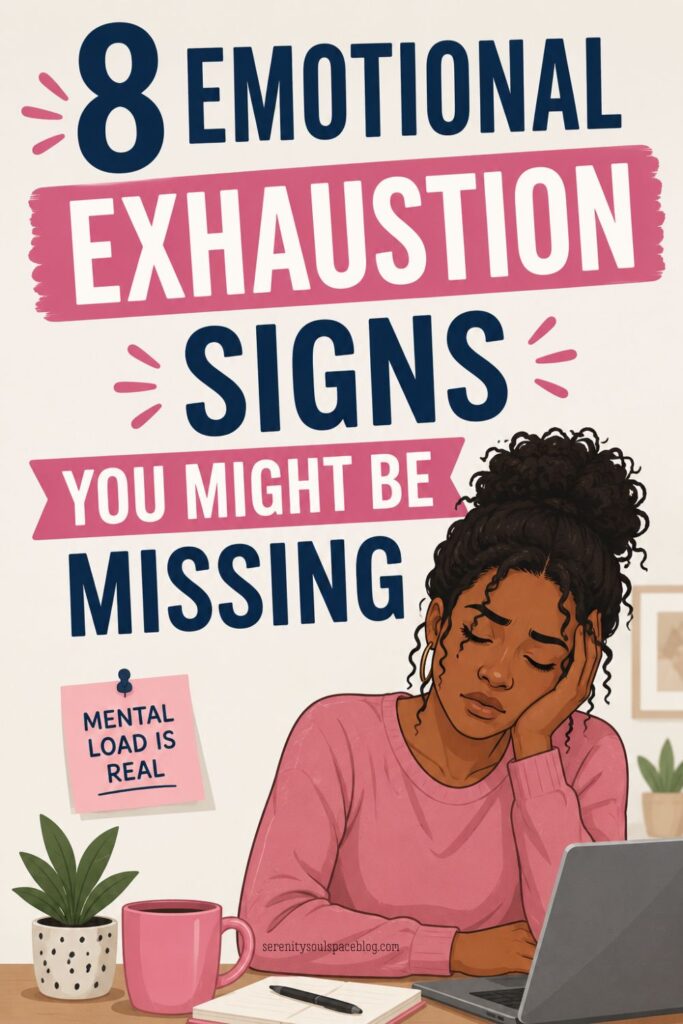
8 Signs Your Exhaustion Is Emotional, Not Physical
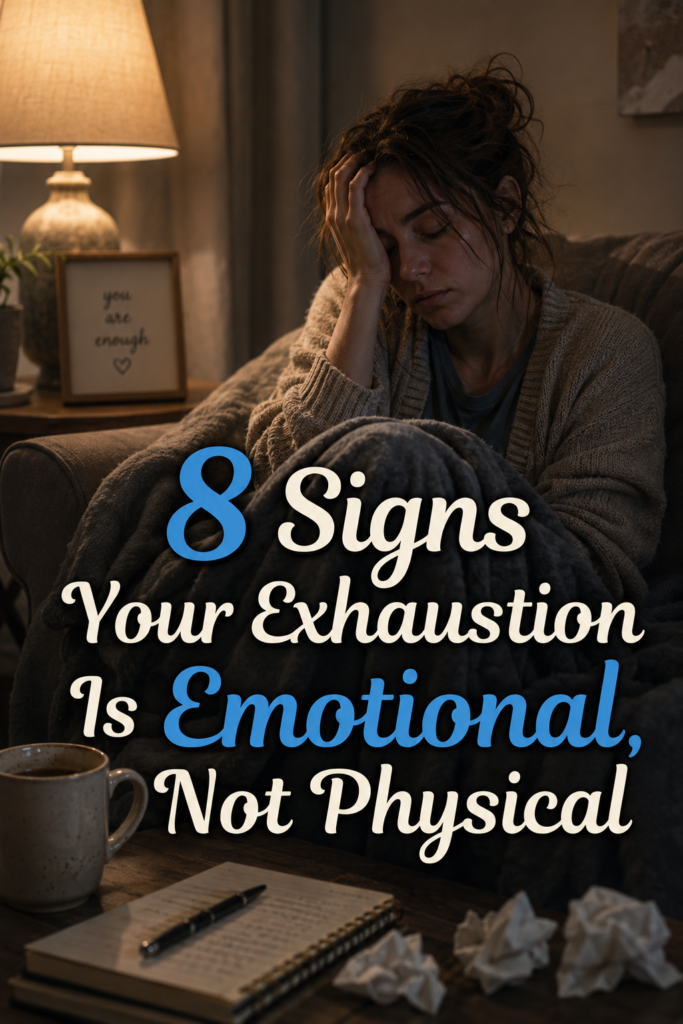
You got a full night of sleep. Maybe you even slept in. But you woke up tired anyway.
And not just a little tired. The kind of tired that sits behind your eyes and follows you through the whole day. The kind that doesn’t go away after coffee or a nap or even a whole weekend of doing nothing.
If that sounds familiar, I want you to hear this: nothing is wrong with you.
But something important might be going on that you haven’t quite put a name to yet. Because here’s the thing most people don’t realize. Not all exhaustion comes from your body. Some of the deepest, most stubborn tiredness you’ll ever feel comes from carrying too much emotionally for too long.
That’s called emotional exhaustion. And if you’ve been walking around wondering why you’re always so tired, it might be exactly what you’re dealing with.
1. You Wake Up Tired Even After Enough Sleep
This is usually the first thing people notice, and it’s one of the most frustrating emotional exhaustion signs to sit with. You did everything right. Decent bedtime, enough hours, maybe even a quiet night. But morning comes and you feel like you never really rested at all.
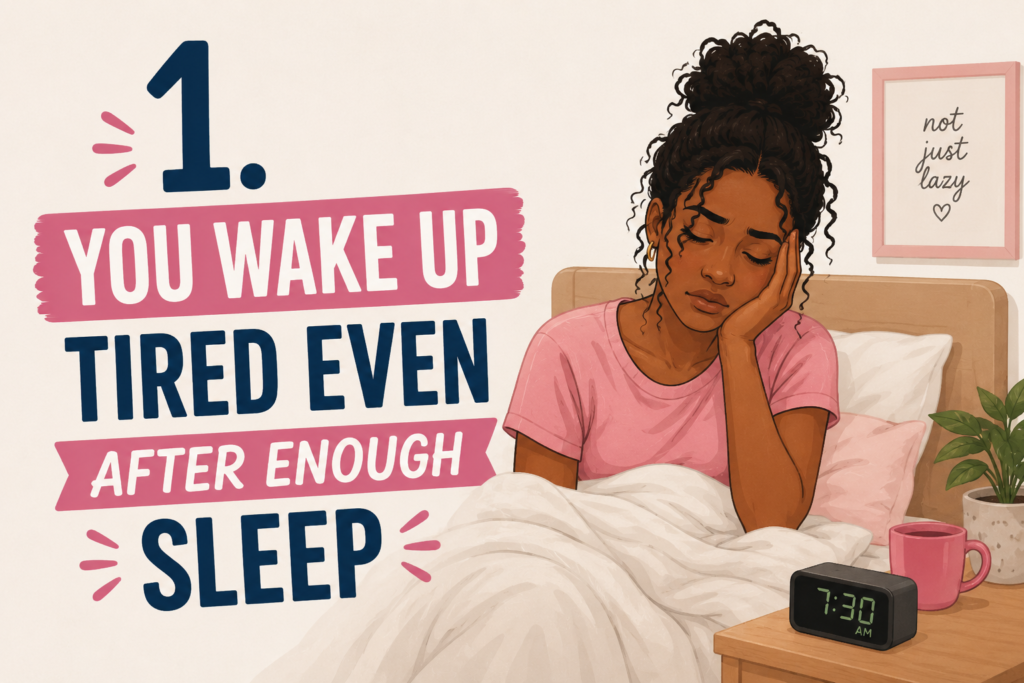
Physical tiredness responds to sleep in a pretty direct way. Your body recovers, and you feel the difference. Emotional exhaustion doesn’t follow that same logic. Your body can be perfectly still while your mind and heart are still quietly working through stress, unresolved feelings, and emotional weight that doesn’t take the night off just because you do.
So when sleep stops feeling like rest, that’s your inner world asking for a different kind of attention than an early bedtime can give.
2. Small Problems Feel Overwhelming
Something small goes sideways and suddenly it feels like a crisis. A last minute change of plans that normally wouldn’t faze you, or a to do list that got a little longer than expected, lands with a weight that doesn’t match the situation at all.
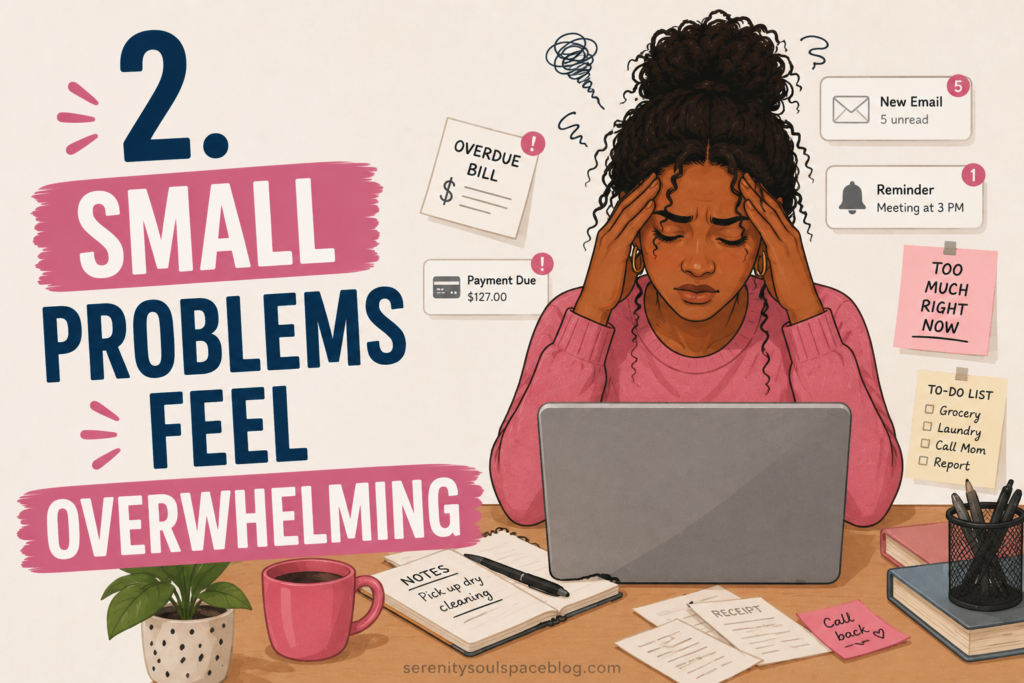
Just as an example, take a cup that’s already filled to the brim. Under normal circumstances, a little extra water is easy to manage. But when you’re already at the edge, even a few drops cause a spill. Small things feel so big right now because they aren’t landing in an empty space. They’re landing on top of everything else you’ve already been carrying. And your nervous system, which has been quietly managing that load, finally has nothing left to give.
That spill isn’t a character flaw. It’s just what depletion looks like up close.
Feeling Seen So Far?
If emotional exhaustion has been weighing on you lately, journaling can be one of the simplest ways to process what’s been sitting on your heart and mind.
➡️ 10 Journals for Emotional Healing, Reflection, and Mental Clarity
3. You Feel Emotionally Numb or Detached
This one tends to sneak up on people because it doesn’t always look like struggle from the outside. There’s no obvious breaking point. You’re showing up, getting things done, holding it together. But somewhere along the way, you stopped feeling much of anything.

Things that used to bring you joy feel flat now, and conversations feel distant. Some people describe it as watching everything from behind glass, present in the room but not quite inside your own life anymore.
That numbness is actually a quiet form of self protection. When you’ve been emotionally overloaded for long enough, your mind starts pulling back from feeling as a way of keeping you functional. It’s not indifference. It’s depletion wearing a very convincing mask.
4. You Get Irritated More Easily Than Usual
If you’ve noticed yourself snapping at people you love or losing patience faster than usual, emotional exhaustion is likely part of the picture. When your emotional reserves are low, the part of you that normally keeps reactions in proportion has very little fuel to work with. Your filter gets thinner, and things that you’d typically brush off start to feel genuinely grating.
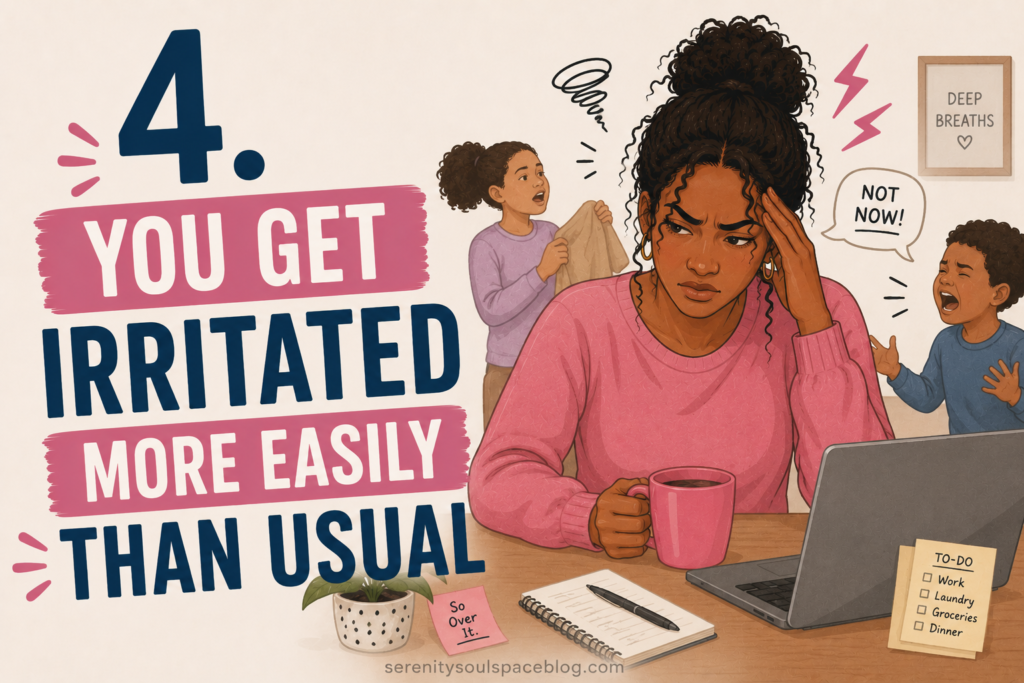
And then comes the guilt, which just adds another layer of weight to what you’re already carrying.
Snapping at someone you love doesn’t make you a bad person. It makes you a person who has been running on fumes for longer than anyone probably realizes, including you.
5. You Constantly Need Alone Time Just to Recover
Wanting alone time is healthy. But notice whether it feels like something you enjoy or something you urgently need just to make it through the week.
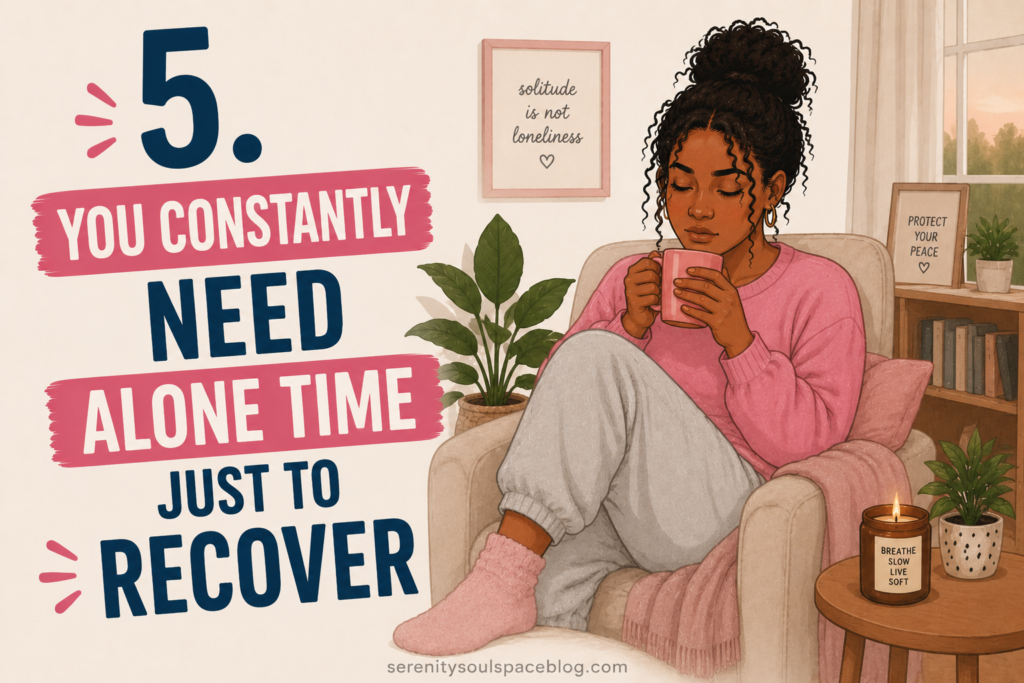
One of the more telling emotional exhaustion signs is when connection starts to feel costly. Even good social interactions leave you completely wiped out. A family gathering you actually wanted to attend, a catch up call with a friend you love, can feel like it took something real from you. Afterward you don’t just want quiet. You need it, the way you’d need water after going too long without any.
6. You Feel Responsible for Everyone Else’s Problems
This one tends to live quietly in people who love deeply and give generously. If you’re the person others lean on, the one who absorbs the room’s mood, listens without being asked, and makes sure everyone else is okay before you think about yourself, you already know how much invisible energy that takes.
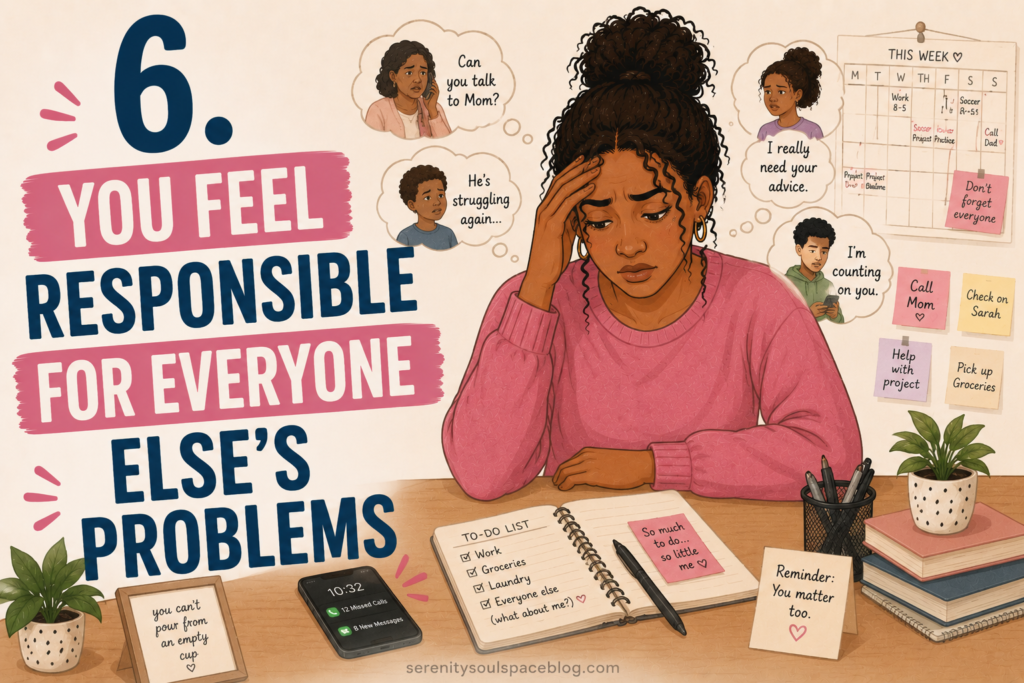
The tricky part is that carrying others often doesn’t feel like a burden at first. It feels like love, like purpose. But over time, giving more than you’re receiving quietly hollows you out, no matter how much you love the people you’re doing it for. Emotional exhaustion builds steadily in the background while you’re too busy taking care of everyone else to notice it happening.
7. Rest Helps Temporarily but Never Fully Restores You
You sleep in on Saturday and notice a slight lift, spend Sunday doing nothing, and by evening you think maybe you’re turning a corner. But Monday morning arrives and you’re right back to that heavy, worn out feeling like the weekend never happened.
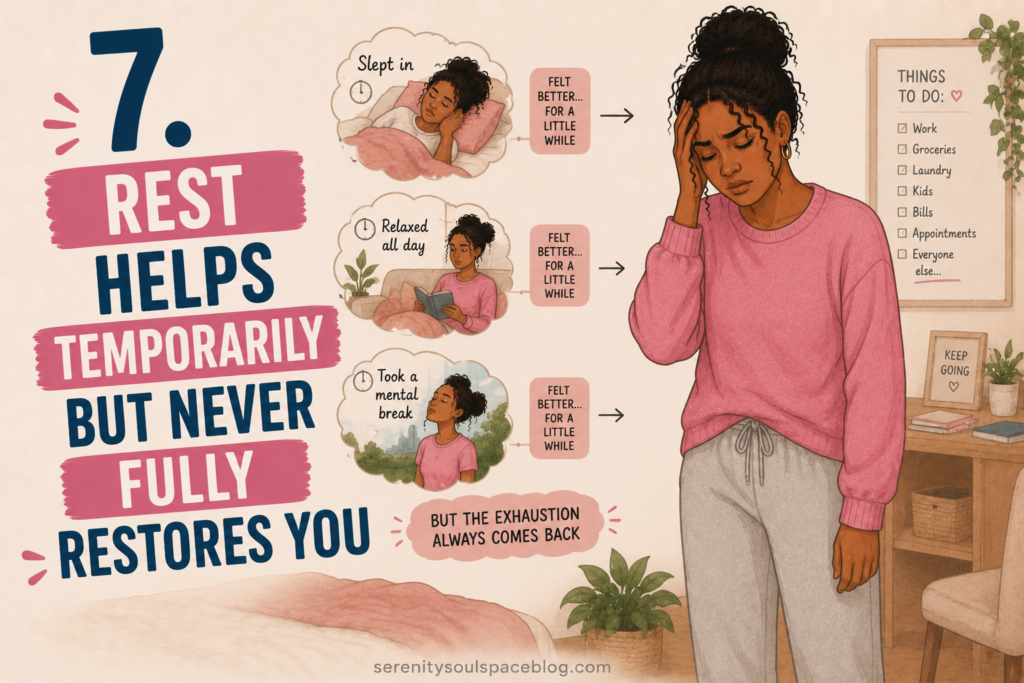
This points directly to the root of the problem. Physical rest gives your body a break, but it doesn’t reach the deeper place where emotional exhaustion actually lives. The drain isn’t coming from your muscles or your sleep schedule. It’s coming from everything you haven’t had space to process yet, the stress you pushed through, the grief you quietly set aside, the feelings that never had anywhere to land.
Rest matters. And you also need something more than rest. You need release.
8. You Feel Mentally and Emotionally Heavy for No Obvious Reason
Maybe nothing dramatic has happened. Your life, from the outside, looks completely fine. But inside, getting started on things feels hard, simple decisions feel harder than they should, and staying present in a conversation takes more energy than you have.
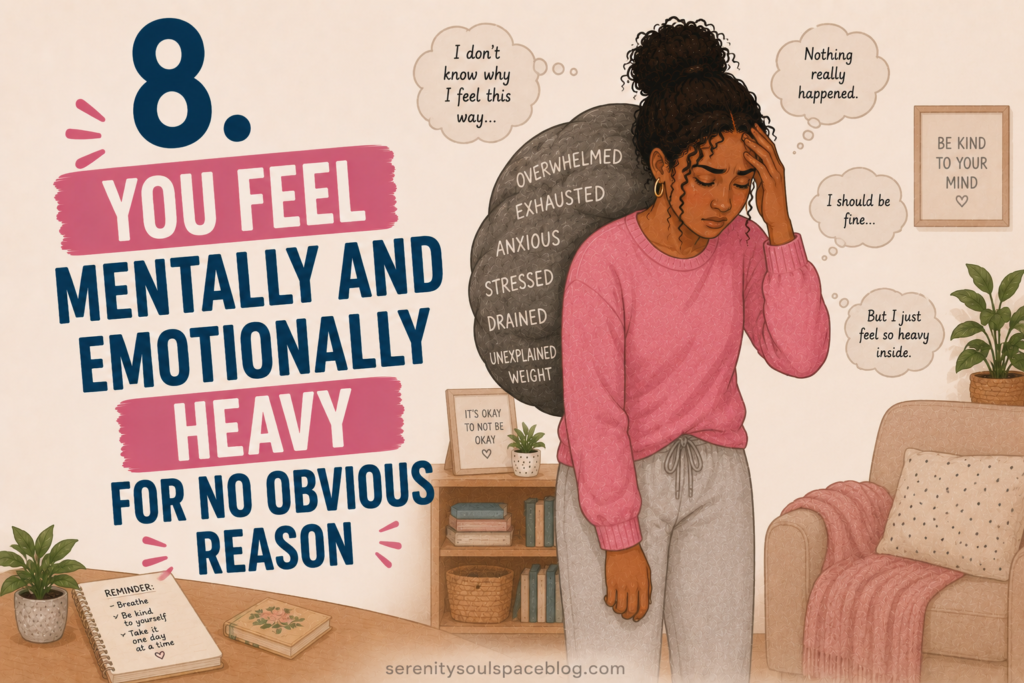
This kind of heaviness is one of the most misunderstood emotional exhaustion signs because it rarely traces back to a single cause. More often it’s the result of quiet accumulation over time. Stress that was managed but never released, disappointments that were buried instead of grieved, needs that went unmet for so long you stopped noticing them.
Your feelings don’t need to be dramatic to be real.
So What Do You Do With This?
Start by letting yourself name it. There’s more power in that than it might seem. A lot of people spend months trying to fix a body problem when the real answer has been emotional the whole time.
Recovery from emotional exhaustion looks different than physical recovery. It involves more than sleep, though sleep still matters. It looks like saying no to things that continuously drain you, processing feelings instead of storing them, and letting yourself receive support instead of only giving it.
For some people, that also means working with a therapist or counselor who can help untangle what’s been quietly building. And if that’s you, that’s a sign of wisdom.
The good news is that emotional exhaustion is something you can genuinely heal from. It takes honesty, time, and the kind of care you’ve probably been giving everyone else for a long time. Now it’s your turn to receive some of it.
Save this post if you need to come back to it. And if it resonated, share it with someone who might need to hear this today.







Leave a Reply
You must be logged in to post a comment.