
Why So Many Overthinkers Are Adding This to Their Bedtime Routine
This post contains affiliate links, meaning that as an Amazon associate, I may earn a small commission at no extra cost to you if you make a purchase through these links. For more details, please read our disclosure policy.
You climb into bed exhausted. Your body is ready. Your eyes are heavy. And then your brain decides it’s the perfect time to replay that awkward thing you said seven hours ago, run through tomorrow’s to-do list, and wonder if you remembered to lock the front door.
Sound familiar?
If you’ve ever spent more time staring at the ceiling than actually sleeping, you already know what racing thoughts at night feel like. And you probably also know that telling yourself to “just relax” does absolutely nothing. Being completely worn out but completely unable to turn your mind off is one of the most frustrating feelings there is.
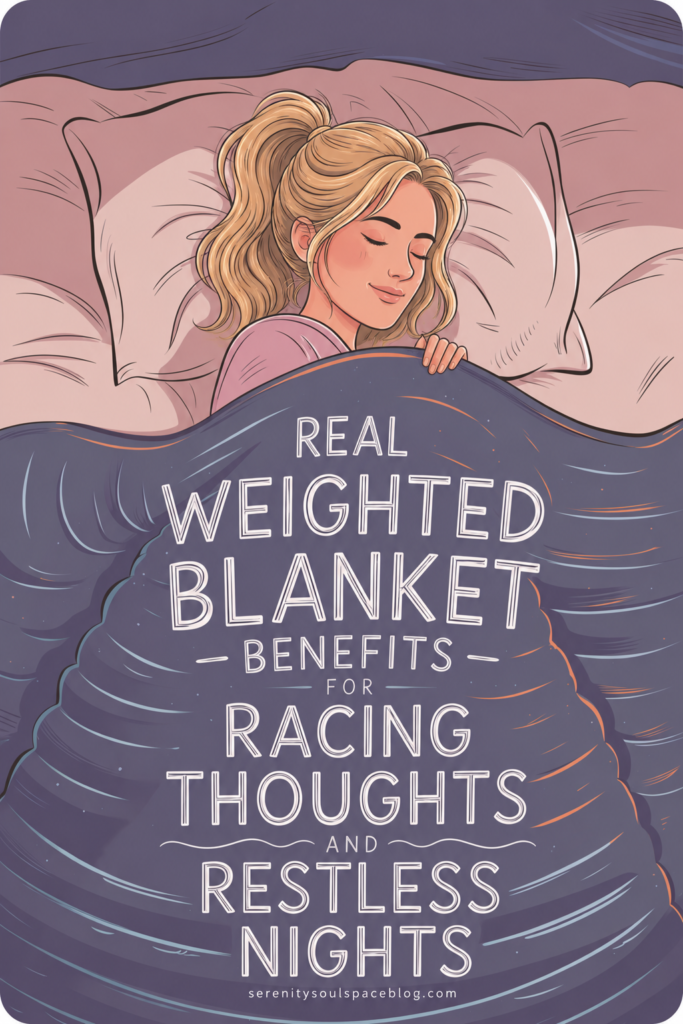
A lot of people are quietly adding one simple thing to their bedtime routine that’s helping them settle faster and feel calmer when they lie down: a weighted blanket. Not as a cure or miracle, but as a tool that makes the whole winding-down process feel a little less like a fight.
You didn’t skip over these, did you?
◉ 100+ Good Morning Tuesday Blessings for Every Kind of Tuesday You Are Walking Into
◉ Why You Can’t Stop Worrying About Things You Can’t Control
Why Overthinking Gets Worse at Night
There’s actually a reason your brain kicks into overdrive the moment your head hits the pillow, and it has everything to do with what happens when the noise of the day stops.
During the day, your mind is busy. Work tasks, conversations, errands, scrolling, notifications. All of that constant stimulation gives your brain something to hold onto. The second you lie down in a quiet room, those distractions disappear, and every unfinished thought you’ve been pushing aside finally has space to show up.
Without the noise and movement of the day to fill the gaps, your brain starts processing. For a lot of people, that processing comes out as worry.
You think about what you didn’t finish. You replay conversations and wonder if you said the right thing. You start planning for scenarios that haven’t happened yet [and probably won’t]. Learning how to stop overthinking at night is one of those things that sounds simple until you’re actually lying there at 1 a.m. trying to do it.
Add in the fact that your natural alertness rises and falls in cycles throughout the day, and it starts to make sense why nighttime can feel like the most mentally overwhelming part of the whole thing.
Signs Your Mind Might Be Carrying Too Much Mental Clutter
Most people who struggle with racing thoughts at night don’t think of themselves as anxious people. They think of themselves as busy, detail-oriented people who care a lot. And that’s often true, because overthinking isn’t always rooted in fear. Sometimes it’s simply a brain that hasn’t learned how to power down.
Below are some signs that your mind might be carrying more than it can comfortably hold before bed:
✓ You feel physically tired but mentally wide awake.
✓ You replay conversations or events from earlier in the day.
✓ You make mental lists even when you’re not trying to.
✓ You wake up in the middle of the night with random thoughts that feel urgent, or…
✓ You dread going to bed because you already know your brain won’t cooperate.
None of these are character flaws. They’re just signs that your nervous system hasn’t gotten the signal yet that it’s safe to rest.
How a Calming Bedtime Routine Can Help
Before we get to the blanket itself, it’s worth talking about what a calming bedtime routine actually does. The goal isn’t just to fill time before sleep. It’s to give your body and mind a consistent signal that the day is over and it’s okay to slow down.
When you do the same things in the same order each night, your brain starts to recognize those actions as cues for rest. Dimming the lights, stepping away from your phone, doing something quiet and low-stimulation. These things work together to ease your nervous system out of its active, alert state and into something calmer.
For a lot of people, the missing piece isn’t the routine itself. It’s the physical sense of comfort and grounding that makes the routine actually feel restful. That’s where a weighted blanket tends to come in.
What Is a Weighted Blanket, Exactly?
A weighted blanket is heavier than a regular blanket and is typically filled with small glass beads or plastic pellets that are evenly distributed throughout the fabric. That weight creates a gentle, consistent pressure across your body when you lie under it.
That pressure is sometimes called deep pressure stimulation. It’s the same general sensation you get from a firm hug or the cocooned feeling of being wrapped up snugly. For a lot of people, that kind of steady pressure has a naturally calming effect on the nervous system, which is part of why so many people started reaching for these in the first place.
Weighted blankets for adults usually range from around 10 to 25 pounds. Most recommendations suggest choosing one that’s roughly 10 percent of your body weight, though personal preference plays a big role, too.
They come in a wide range of fabrics, from cooling options to ultra-soft minky to breathable cotton, so there are choices for people who sleep warm, cold, or somewhere in between.
The Benefits of Using a Weighted Blanket
People reach for weighted blankets for all kinds of reasons, and the experience tends to be pretty personal. With that said, some benefits come up again and again no matter who you ask.
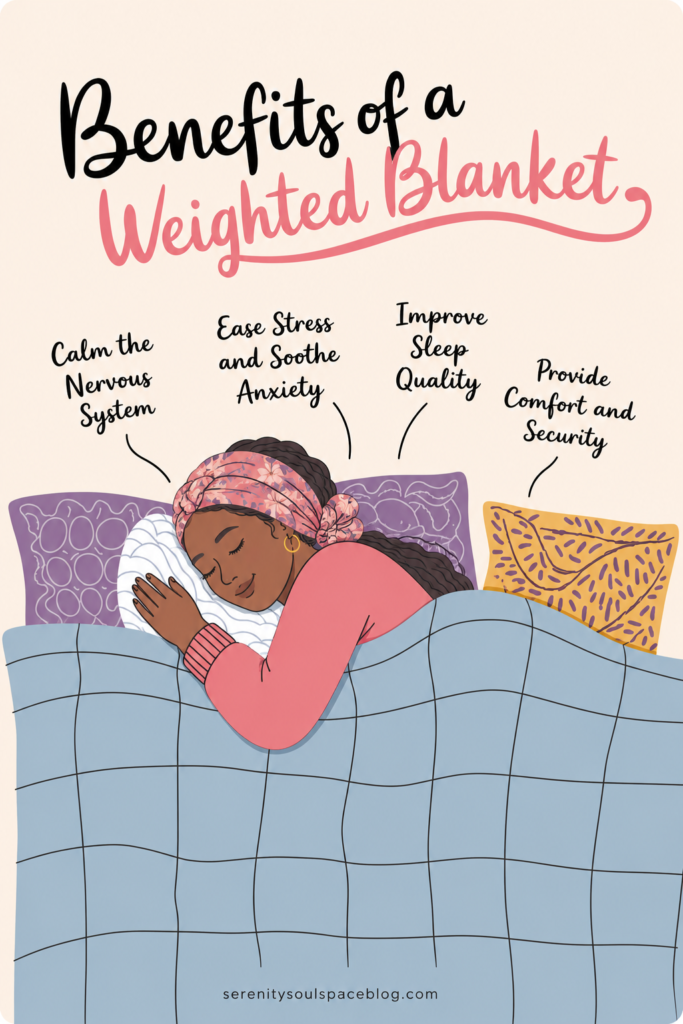
◘ It helps calm your nervous system. Your body carries a lot of tension through the day without you even realizing it. The gentle, even pressure of a weighted blanket can help shift your body out of that overstimulated, on-edge state and into something that actually feels calm. A lot of people notice their breathing slow down within minutes of pulling one over themselves.
◘ It can help reduce anxiety at bedtime. If worry and racing thoughts are what keep you up, weighted blanket benefits for anxiety are worth paying attention to. The pressure gives your nervous system something steady and grounding to focus on, which can make those spinning thoughts a little easier to set down for the night.
◘ It may help you fall asleep faster. Lying in bed wide awake is its own kind of exhaustion. When your body has a physical cue that it’s time to settle, the transition from alert to drowsy tends to happen more naturally. Instead of fighting your way toward sleep, you start easing into it.
◘ It can reduce nighttime tossing and turning. A lot of restless sleepers move around so much because their body never fully feels settled. The added weight encourages your body to stay still in a way that feels comfortable rather than forced, which makes for a more uninterrupted night overall.
◘ It creates a real sense of security. There’s a reason being hugged feels good. The pressure of a weighted blanket mimics that same sensation of being held, and for people who feel unsettled or anxious at night, that physical sense of security can make a surprising difference in how quickly they relax.
◘ It may help lower your body’s stress response. Deep pressure stimulation has been studied for its effect on the body’s stress hormones, and the results are encouraging. Basically, your body responds to that steady, gentle pressure the same way it responds to comfort, and that can help you feel less wound up even on hard days.
◘ It supports emotional regulation when life gets heavy. Feeling calmer in your body makes it easier to manage what’s going on in your head. During stressful seasons, a weighted blanket isn’t just a sleep tool. It’s something a lot of people reach for while reading, watching TV, or just sitting quietly because the “grounding” feeling helps take the edge off.
◘ It encourages stillness in a way that feels good. Most people who overthink at night aren’t great at slowing down. A weighted blanket makes stillness feel worth staying in. That cocooned, wrapped-up sensation naturally nudges you toward rest, quiet, and presence instead of the next thing on your mental list.
Weighted blankets are not a medical treatment, and they won’t fix whatever is weighing on you at the root. What they can do is give your body the kind of physical comfort that makes everything else a little easier to handle, especially when the goal is simply to rest.
What Using One Actually Feels Like
Some nights you climb into bed already knowing your brain has no intention of cooperating. Something at work went sideways, you had a hard conversation you’re still processing, and your to-do list is already forming for tomorrow.
You get into bed, pull a weighted blanket over yourself, and within a few minutes something shifts. Your shoulders drop a little, and your breathing slows. The thoughts are still there, but they’re not pulling at you quite as hard.
That’s the experience a lot of weighted blanket users describe. Not silence exactly, but a kind of heaviness that makes it easier to let thoughts pass instead of chasing them.
For someone who’s been dealing with racing thoughts at night for years being an educator, that subtle shift can feel like a big deal. The goal isn’t to feel sedated or knocked out. It’s to finally have a physical signal that tells your body it’s okay to stop holding everything together for a few hours.
Choosing a Weighted Blanket: What to Look For
If you’re thinking about trying one, here’s what’s actually worth paying attention to.
◘ Weight. The standard starting point is about 10 percent of your body weight, but some people prefer a little lighter and some prefer heavier. If you’re not sure, starting in the middle of the recommended range and adjusting from there is a smart approach.
◘ Fabric. This matters more than it sounds. A weighted blanket for adults who sleep warm is going to feel very different from one designed for someone who’s always cold. Look for breathable cotton or cooling fabrics like COOLMAX if you tend to overheat. If you love that super-soft, plush feeling, minky fabric is wildly popular for a reason.
◘ Construction quality. The best weighted blanket is one that stays consistent over time. Look for tight, even stitching and glass beads rather than plastic pellets. Glass beads tend to be quieter, denser, and more evenly distributed through the fabric. A well-made blanket should not clump, shift, or fall apart after a few washes.
◘ Size. A weighted blanket is designed to stay on one person, not drape over the entire bed. Most adults use a throw or twin size that covers their body without hanging off the sides. Sharing a weighted blanket usually defeats the purpose.
◘ Where it’s made. If craftsmanship and materials matter to you, it’s worth checking. Blankets hand-stitched with care and attention to detail tend to hold up better and feel more consistent than mass-produced options over the long run.
Who Tends to Love Weighted Blankets
A weighted blanket for adults isn’t just for people dealing with serious sleep issues. They’re popular with anyone who wants to sleep better naturally, build a more intentional bedtime routine, or simply have something that makes getting into bed feel genuinely comfortable rather than something to dread.
People who tend to be especially drawn to them include those who feel restless or unsettled at night, people who carry a lot of stress and want a physical way to decompress, anyone who already gravitates toward heavy blankets, and people looking for anxiety relief that doesn’t require complicated routines or medication.
They can also be a great fit for people who work from home, where the line between “on” and “off” tends to blur, and having a dedicated comfort ritual at night helps the brain register that the workday is actually over.
A Few Things to Keep in Mind
Weighted blankets aren’t for everyone, and it’s fair to know that going in.
Some people find the weight feels uncomfortable or too warm, especially during warmer months. If you tend to sleep hot, look specifically for a cooling fabric option or start with a lighter weight.
It’s also worth knowing that some people take a few nights to adjust. The first time can feel a little unusual if you’ve never slept under something that heavy before.
Weighted blankets are best used on top of you and should not completely cover your head or face. If you have any health conditions that affect circulation or breathing, it’s worth a quick conversation with your doctor before trying one!
Cost is the other real consideration. A quality weighted blanket is an investment, not an impulse buy, but a well-made one holds up for YEARS. Spread across all those nights of better sleep, the cost per use tends to look pretty reasonable.
Why Mosaic Weighted Blankets Stand Out
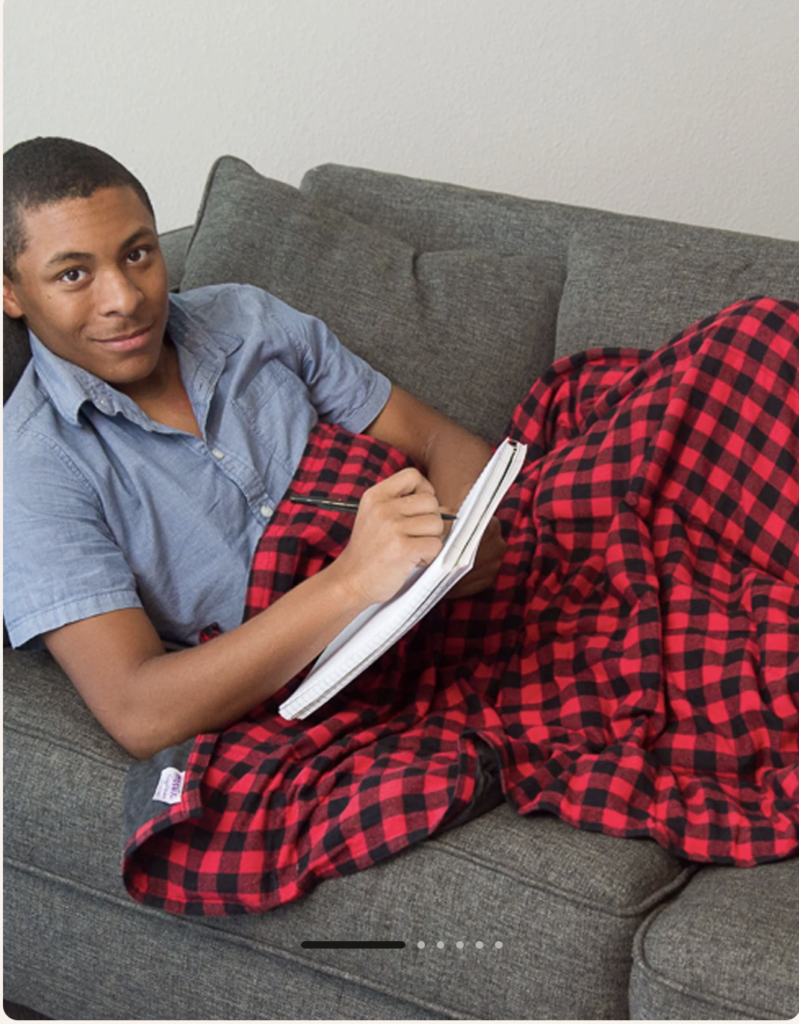
Mosaic Weighted Blankets is a woman-owned brand that hand-stitches their blankets in Texas using premium, non-toxic glass beads and high-quality fabrics. Trusted by over 58,000 sleepers and featured in Forbes, Healthline, The Wall Street Journal, and CBS, they’ve built a reputation on quality that holds up over time.
What makes Mosaic worth looking at is the variety of options they carry. Cotton weighted blankets, ultra-soft minky in several colors, COOLMAX cooling blankets for people who sleep warm, and even custom weighted blankets made to your exact specifications. There is genuinely something for every kind of sleeper. Every blanket is double-stitched and designed to last through regular washing, which matters more than people realize until they’ve bought a cheaper option that starts falling apart.
Their blankets are double-stitched and designed to last through regular washing, which matters more than people realize until they’ve bought a cheaper option that starts falling apart.
Browse their full collection at mosaicweightedblankets.com.
A Simple Shift That Makes Bedtime Feel Different
If you’ve been lying awake night after night, replaying your day and dreading tomorrow, you don’t need a complete life overhaul. Sometimes you just need to give your body something different to work with.
Building a calming bedtime routine for adults doesn’t have to be elaborate. In fact, it can be as simple as dimming the lights earlier, stepping away from your phone, and climbing into bed under something that actually makes you feel held and settled. Over time, that one small addition can make the space between wakefulness and real sleep feel a whole lot less like something you have to fight your way through.
For the overthinkers, the restless ones, and the people who wake up at 3 a.m. for no good reason, your mind is simply doing what busy, tired minds do. Sometimes it just needs a little more help getting the message that the day is done.
That’s exactly what this is for.
Readers are enjoying reading…
◉ 100+ Good Morning Tuesday Blessings for Every Kind of Tuesday You Are Walking Into
◉ Why You Can’t Stop Worrying About Things You Can’t Control







Leave a Reply
You must be logged in to post a comment.