
Can a Weighted Blanket Help With Menopause Insomnia?
This post contains affiliate links, meaning that as an Amazon associate, I may earn a small commission at no extra cost to you if you make a purchase through these links. For more details, please read our disclosure policy.
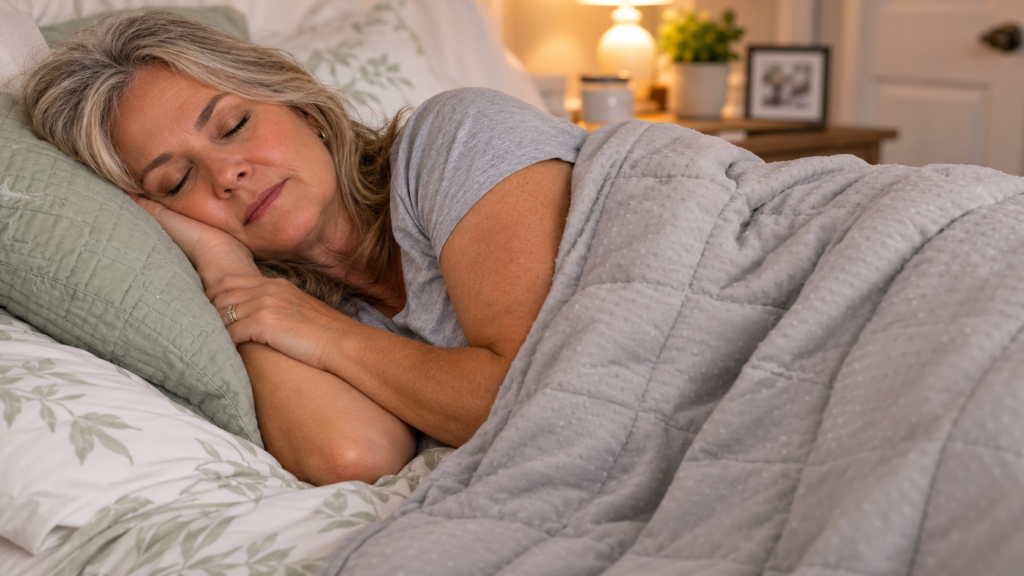
If you’ve spent the last few months staring at your ceiling at 2 a.m., wide awake for no clear reason, you already know how exhausting menopause insomnia can be. It’s not just annoying. It chips away at your patience, your focus, and your ability to function the next day. And if you’ve started researching solutions, chances are weighted blankets have come up more than once.
So do they actually work for this specific kind of sleeplessness? The short answer is yes; but for many women, though, it helps to understand why before you invest in one.
Why Menopause Wrecks Your Sleep in the First Place
Menopause insomnia isn’t like typical stress-related sleeplessness. Hormonal shifts, especially dropping estrogen and progesterone, directly interfere with your body’s ability to regulate temperature and produce melatonin. That’s why so many women describe waking up drenched in sweat, then lying awake with a racing mind, unable to drift back off.
Add anxiety to the mix, which is extremely common during perimenopause and menopause, and you get a nervous system that’s stuck in a low-grade state of alert. Your body doesn’t feel safe enough to fully relax, even when you’re bone tired.
This is exactly where weighted blankets come into the picture.
The Science Behind Deep Pressure Stimulation
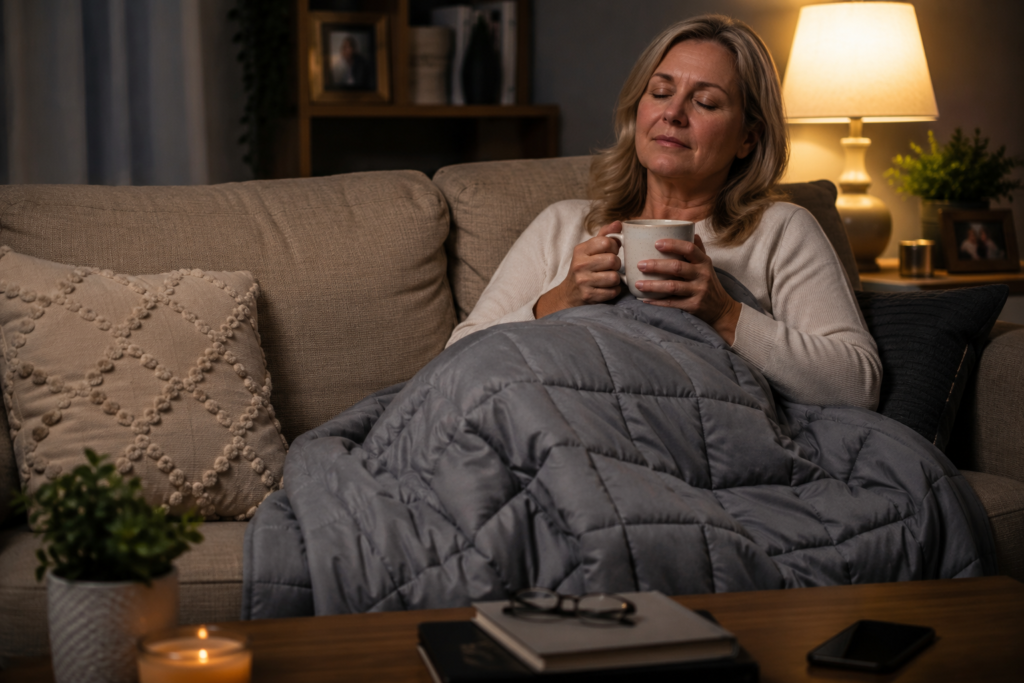
Weighted blankets work through something called deep pressure stimulation, sometimes referred to as deep touch pressure. The gentle, even weight distributed across your body mimics the sensation of being held or hugged.
Research has shown this type of pressure can lower cortisol levels while increasing serotonin and melatonin, the hormones responsible for feeling calm and getting sleepy.
For someone dealing with menopause-related anxiety, this matters a lot. A 2020 study published in the Journal of Clinical Sleep Medicine found that weighted blankets significantly reduced insomnia severity in participants with mental health conditions, including anxiety disorders. Participants also reported better daytime functioning and not just improved sleep at night.
Menopause doesn’t automatically come with a clinical anxiety diagnosis, but the physiological response looks similar. Your nervous system is activated. Your mind won’t quiet down, and your body has trouble settling into rest mode.
A weighted blanket essentially gives your nervous system a physical cue that says it’s safe to relax now.
Connect the Dots…
◉ 10 Things That Help Protect Your Peace During Overwhelming Seasons
◉ 7 Things That Actually Help When You Feel Exhausted All the Time
What Weighted Blankets CANNOT Fix
It’s worth being honest here. A weighted blanket won’t stop hot flashes. It won’t rebalance your hormones or replace medical treatment if you need it.
If night sweats are your primary issue, temperature regulation matters just as much as pressure, which we’ll get into shortly.
What a weighted blanket can do is address the anxious, wired feeling that often accompanies menopause insomnia.
Many women describe lying in bed with a mind that won’t stop spinning, even though their body is exhausted. That mental restlessness responds well to deep pressure.
Your thoughts don’t necessarily stop, but the physical calm often makes it easier to let them pass instead of spiraling.
Choosing the Right Weight and Material
This part matters more than people expect. A blanket that’s too light won’t create enough pressure to feel calming. One that’s too heavy can feel restrictive, and for women already dealing with night sweats, extra bulk can make overheating worse.
Most sleep experts recommend choosing a blanket that’s roughly 10 percent of your body weight. So a 150-pound woman would generally do well with a 15-pound blanket.
Some people prefer slightly less, especially if they’re new to weighted blankets and want to ease into the sensation.
Material matters just as much as weight.
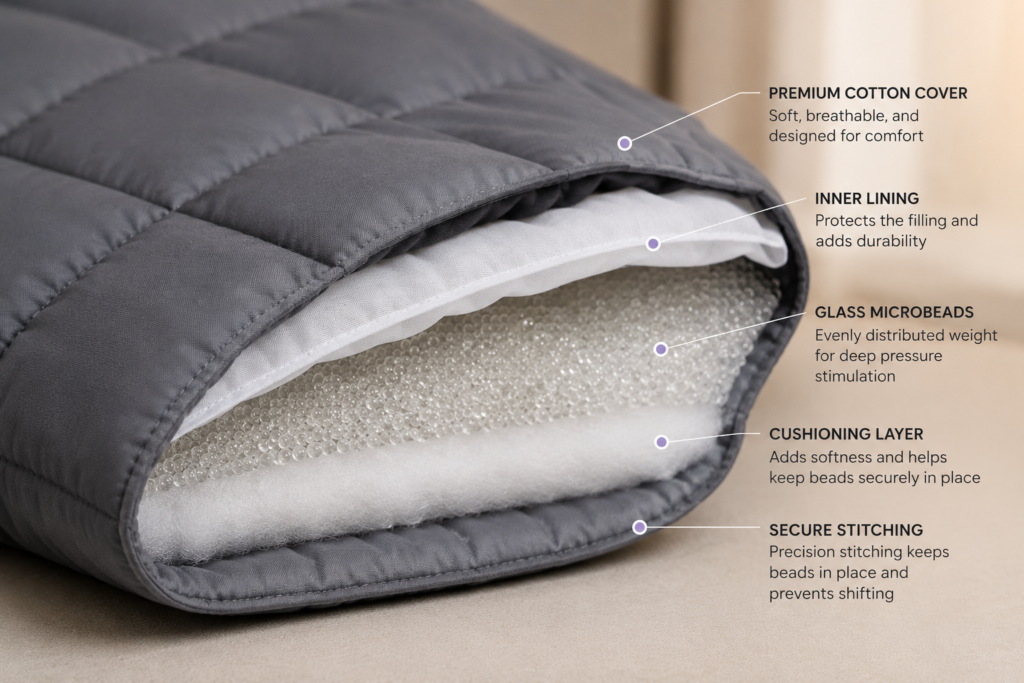
Since night sweats are such a common menopause symptom, cooling fabrics make a real difference. Look for blankets made with breathable materials like bamboo viscose, cotton, or specialized cooling fabrics designed to wick moisture away from your skin.
Glass bead filling tends to sleep cooler than plastic poly pellets, since the beads are smaller and distribute more evenly without trapping heat.
Mosaic Weighted Blankets, for example, offers cooling options specifically designed for hot sleepers, which makes them worth a look if night sweats are part of your sleep struggle.
How to Actually Use One for Menopause Insomnia
Buying the blanket is only half the equation. How you use it shapes how much it helps.
Start by using it consistently, not just on the nights you’re already struggling. Your nervous system responds well to routine, and a weighted blanket becomes part of a broader signal to your body that it’s time to wind down.
Pair it with a consistent bedtime and a cool room, ideally between 65 and 68 degrees, since temperature plays such a large role in menopause sleep issues.
If night sweats wake you up mid-sleep, keep a lighter breathable sheet nearby so you can adjust without fully removing the weighted blanket.
Some women alternate, using the weighted blanket to fall asleep and switching to a lighter cover if they wake up overheated later in the night.
Give it time, too. Deep pressure stimulation tends to work better with repeated use rather than as an instant fix. A few nights probably won’t tell you much. Two to three weeks gives your body a real chance to respond.
Who Tends to Benefit Most
Weighted blankets seem to help most with the anxious, racing-mind version of menopause insomnia, the kind where you’re tired but can’t settle down. Women whose sleep issues feel more mental than physical tend to notice the biggest difference. Their bodies feel ready for rest, but their thoughts just won’t cooperate.
If your insomnia is driven almost entirely by night sweats and temperature swings, a weighted blanket alone probably won’t solve it. In that case, pairing it with cooling sheets, a fan, and moisture-wicking sleepwear will get you further than the blanket by itself.
Most women end up needing both. Cool the room, calm the nervous system, and tackle the problem from two sides at once. Menopause sleep issues rarely come from just one cause, so it makes sense the fix usually takes more than one tool.
Is It Worth Trying?
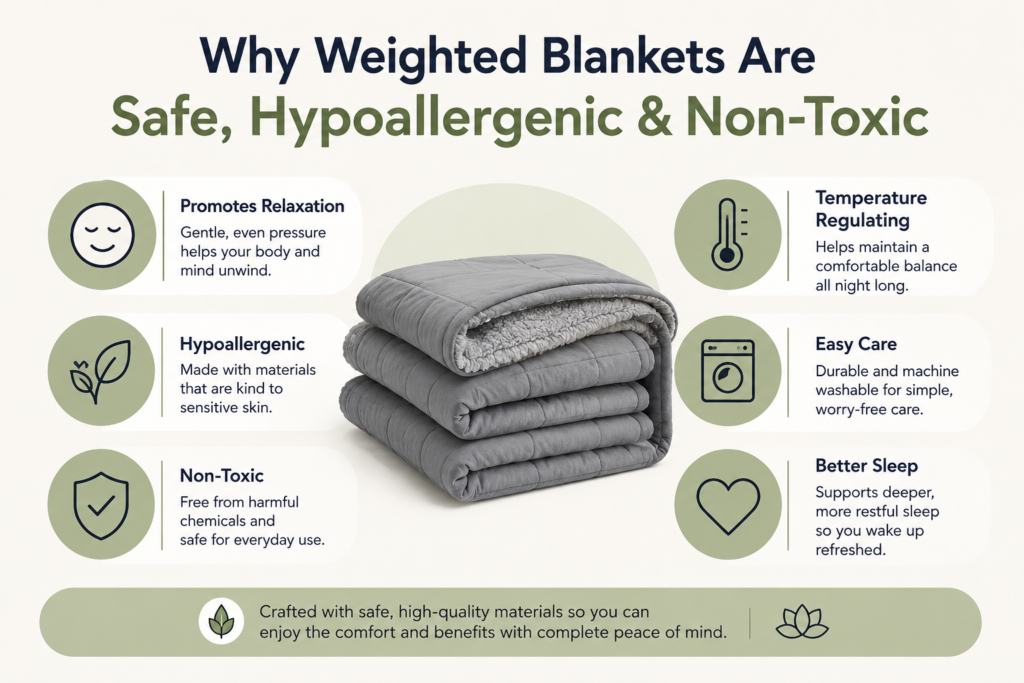
Given the low risk and reasonably low cost compared to some sleep aids, a weighted blanket is a fairly easy thing to test out. It’s not medication, so there’s no concern about side effects or interactions with other treatments you might be using.
Worst case, you end up with a cozy blanket.
Best case, you finally get the kind of deep, uninterrupted sleep that’s felt out of reach for months.
If you’re navigating menopause insomnia and haven’t tried one yet, it might be worth adding to your nightstand routine.
Just pay attention to the weight and material you choose, since getting those details right makes a real difference in whether it actually helps or just adds extra warmth to nights that are already too hot.
Articles That Connect…
◉ Best Weighted Blankets for Teachers After a Stressful Day
◉ Why So Many Exhausted Adults Are Trying Weighted Blankets for the Midweek Slump
◉ What Actually Helps When Emotional Burnout Follows You Into the Weekend
◉ Why So Many Overthinkers Are Adding This to Their Bedtime Routine







Leave a Reply
You must be logged in to post a comment.