
The One Number That Tells You Where You Actually Stand
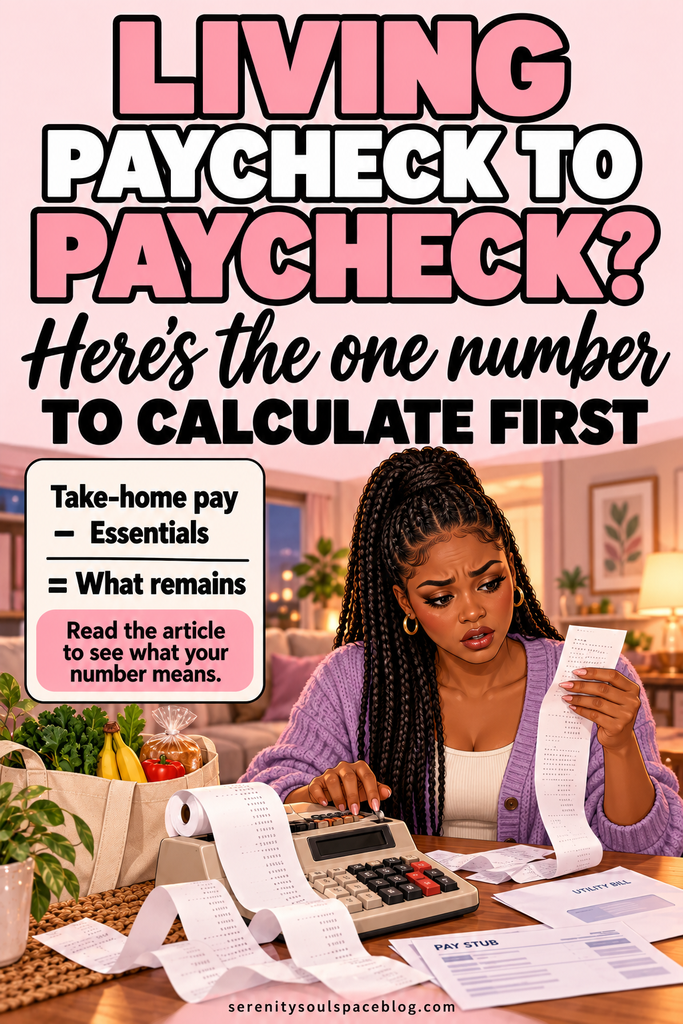
You can’t fix a month you can’t see clearly. Before any plan, budget, or tip works, there’s one number that has to come first: what’s actually left after you pay your bills.
Most budgeting advice skips straight to cutting spending. That’s backward. You can’t know what to cut, or whether cutting is even the problem, until you know this number.
Where this started
I teach middle school, and most of what I know about this didn’t come from a textbook. It came from watching grocery and gas prices climb year after year while paychecks sat still, and from doing this same math myself more nights than I’d like to count.
When I decided to put something together, I didn’t want a budgeting worksheet that assumes you just haven’t tried hard enough. I wanted the actual starting point, the one number that tells you where you stand, because you can’t fix what you can’t see.
Find your number in about 20 minutes
You need three numbers, and no app or spreadsheet required.
Number 1: your monthly take-home pay. The money that actually lands in your account after taxes, from every source, your job, child support, benefits, anything that arrives every month. If your hours change week to week, use your lowest month from the last three, not your best one.
Number 2: your monthly essentials. Rent or mortgage, utilities, groceries, transportation, health costs, phone and internet, minimum debt payments, childcare.
The following two costs are easy to overlook, even though they’re just as real as rent or groceries:
- Skipped needs. If you’re going without something you actually need, a prescription, a dental visit, work shoes, write it down anyway with your best guess at the cost. It’s still part of your real picture, even if you can’t pay it yet.
- Yearly bills. Car registration, renewals, anything that hits once a year instead of monthly. Add up the yearly cost, divide by 12, and count that as one monthly line.
Number 3: what remains. Subtract your essentials from your take-home pay. That’s it. That number is what you actually have to work with for everything else, surprises, savings, treats, all of it.
What your number means
Wherever that number lands, it tells you what to do next.
If you have $50 or more left, you have some room to work with, for finding more breathing room and starting a buffer.
If you have less than $50 but you’re still above zero, you’re in the most common spot, and also the least stable. One missed shift or one car repair can tip the month. The move here is building a plan for a bad month before it happens, not after.
If you’re below zero, your essentials cost more than you bring in. That’s a math problem, not a character problem, and no budget fixes it alone. That’s where outside help, real programs, not vague advice, actually matters.
A number alone isn’t a plan
Knowing where you stand is the starting point, not the finish line. It doesn’t tell you which bills to pay first when money’s short, what to say when you need more time, or what happens the month something goes wrong. That’s the part a single number can’t cover.
What I built for that
How to Live Life When the Money Runs Out Before the Month Does walks through all of it in 69 pages. It picks up exactly where this number leaves off: the order to pay bills when money’s tight, 19 word-for-word scripts for the hardest calls, a real map of assistance programs with actual income limits, and 11 fillable worksheets, including one that does this exact calculation for you, so you only have to do it once and then just update it.
Every program and rule inside was checked against official government sources before it went in.
Get 11 fillable worksheets, free
The full set of worksheets, including the one for this exact calculation, is also available on its own, free, print-ready, no guide required.
If you want the rest
The full guide is $14.99. It starts with your real number and builds a complete plan from there, no lecture, no shame.








Leave a Reply
You must be logged in to post a comment.