
Your Plan for a Bad Month, Before It Happens
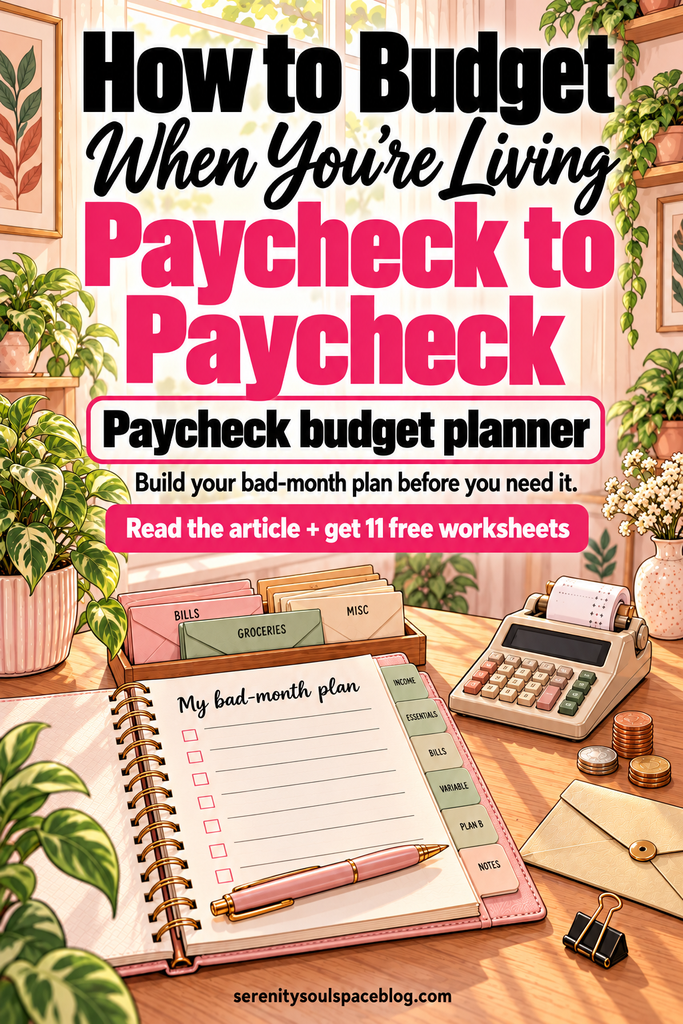
A bad month doesn’t usually arrive with a warning. A shorter paycheck, a missed shift, a car repair, a sick kid, and suddenly the plan you had on paper doesn’t hold. The time to build a plan for that is before it happens, not in the middle of it.
What I learned building this
I teach middle school, which means I’ve had a front row seat to how differently people’s months can turn out depending on whether they saw trouble coming or not. Grocery spending, gas prices, copays, none of it has gotten cheaper, and I’ve lived that squeeze right alongside the families I see every day.
What I kept noticing is that the people who made it through a rough month without a crisis weren’t the ones with more money. They were the ones who had already decided, ahead of time, what they would do if a shift got cut or a bill came due at the wrong moment. So that is what I built first: a plan you make once, before you need it.
Build this once, use it whenever you need it
This takes about 15 minutes, and you only have to do it once. Here’s the whole plan, in six parts.
1. Your warning sign. Pick a trigger with a real number attached, not a feeling. One option: your balance falls below one week’s worth of essentials while payday is still more than seven days out. Another: a paycheck comes in $100 or more short. Either way, you’ll know a bad month is starting before it’s already a crisis.
2. Your line. Know which bill, if money ran short this month, would need a call first. Naming it ahead of time means you’re not figuring that out under pressure.
3. Your calls. Decide who you’d contact and what you’d ask, before you actually need to. Having the words ready matters more than people expect.
4. What you pause. Decide in advance what stops for the month if things get tight: subscriptions, extra spending, anything non-essential. If the honest answer is “nothing to pause,” that’s real information too, not a failure.
5. Your backup help. Know where you’d turn. 211 is a free helpline that connects you to local help with food, rent, utilities, and health costs, worth saving the number before you need it, not after.
6. Your protected pleasure. One free or low-cost thing that stays in your life no matter how tight the month gets: a walk, a call with a friend, a movie night at home. A hard month is easier to get through when it still has one good thing in it.
One real script to start with
When a bill is due and you know you’ll be short, calling before the due date works better than calling after. Here’s what that call can sound like, word for word:
“Hi, my name is [your name], and my account number is [number]. My bill of [amount] is due on 2026, and I won’t be able to pay the full amount. I’d like to ask about a payment arrangement or an extension. I can pay [amount] now and the rest by 2026. Do you have any hardship or assistance programs I can apply for?”
That one script works for most utility companies as written. It’s one of 19 in the full guide, for landlords, lenders, hospital billing offices, and debt collectors too.
What this plan can’t do alone
This plan tells you what to do when a month goes sideways. It doesn’t map out every assistance program you might qualify for, or what to do if the gap is bigger than one bad month. That’s a different problem, and it needs more than six steps.
What I built for that
How to Live Life When the Money Runs Out Before the Month Does covers that part too, real programs for food, health coverage, energy bills, and rent, with actual income limits, not vague pointers. All 19 scripts live there, plus 11 fillable worksheets, including a one-page version of this exact plan, ready to fill in and keep on your phone.
Get 11 fillable worksheets, free
The full worksheet set, including this one, is free on its own, no purchase required.
If you want the rest
The full guide is $14.99, 69 pages built to help you make it through a bad month without blame attached.








Leave a Reply
You must be logged in to post a comment.